Cross-Chain & Interoperability: Bridges, L2s, Rollups
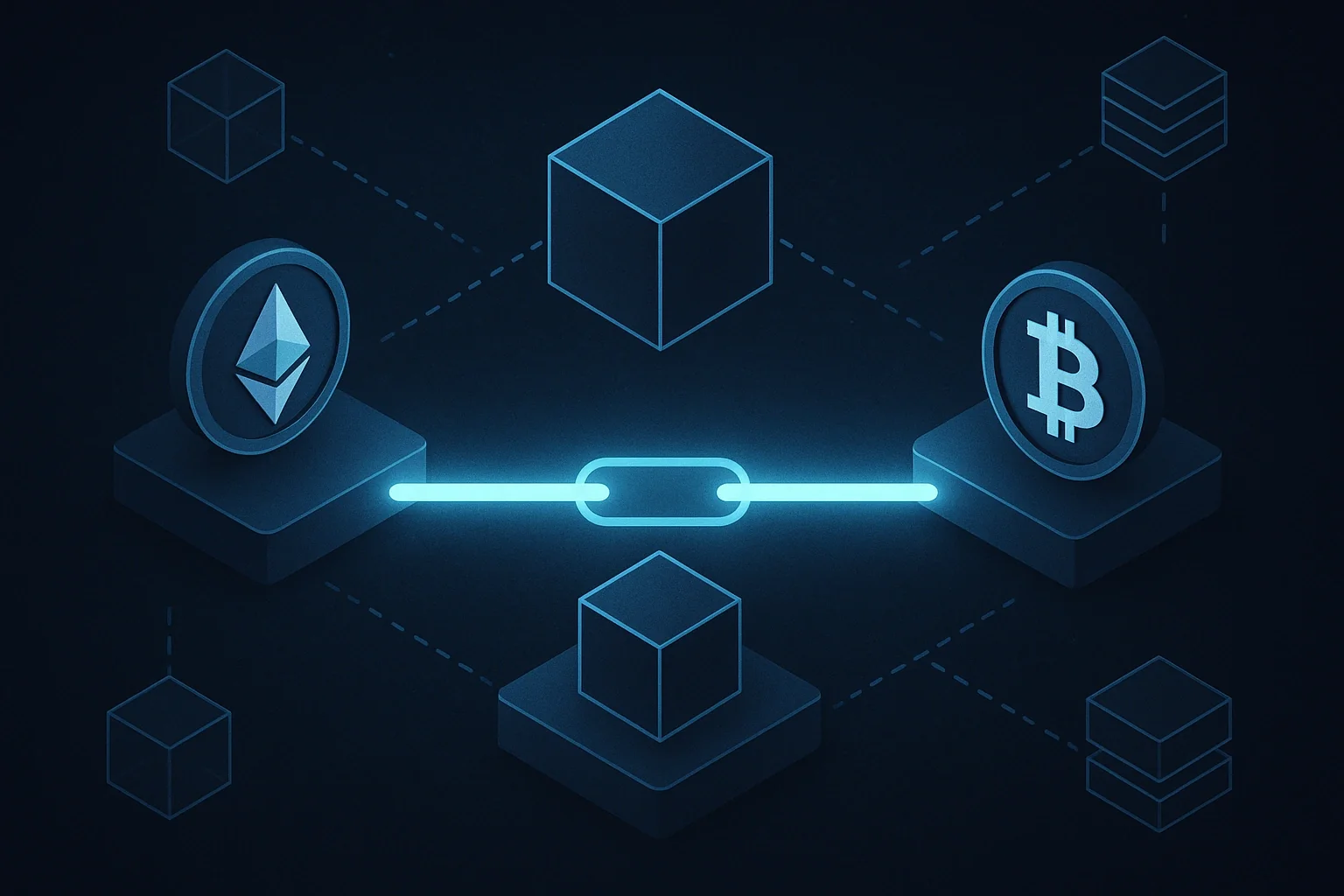
Discover blockchain interoperability solutions, cross-chain bridges, L2s, and rollups. Learn what is interoperability in blockchain and its impact on DeFi and Web3.
The rapid growth of blockchain networks has created a fragmented ecosystem, where assets and data often remain siloed. Blockchain interoperability has emerged as a critical solution, enabling seamless communication and value transfer across chains.
Understanding what is interoperability in blockchain and the latest blockchain interoperability solutions is essential for developers, investors, and enterprises seeking to leverage decentralized finance, NFTs, and Web3 applications.
What Is Interoperability in Blockchain?
Interoperability in blockchain refers to the ability of different blockchain networks to communicate, share data, and transfer assets seamlessly without centralized intermediaries.
Key aspects include:
- Asset Transfer: Moving tokens across chains without losing ownership or security.
- Data Exchange: Sharing smart contract outputs or transactional data between networks.
- Cross-Chain Execution: Running applications that utilize multiple blockchains simultaneously.
Effective interoperability fosters ecosystem growth, reduces fragmentation, and enables more sophisticated decentralized applications.
Blockchain Interoperability Solutions
Several innovative blockchain interoperability solutions have emerged to solve cross-chain challenges. They can be categorized into three main approaches:
1. Bridges
Bridges connect separate blockchains, allowing tokens and data to move securely between them.
- Mechanism: Lock tokens on the source chain and mint equivalent assets on the destination chain.
- Examples: Polygon Bridge, Avalanche Bridge, Wormhole.
- Benefits: Enables cross-chain DeFi, NFT transfers, and liquidity migration.
- Risks: Smart contract vulnerabilities and bridge hacks remain key concerns.
2. Layer 2 (L2) Scaling Solutions
L2 solutions operate atop existing blockchains to increase throughput, reduce costs, and enable interoperability.
- Mechanism: Transactions are executed off-chain and periodically settled on the main chain (Layer 1).
- Examples: Optimism, Arbitrum, zkSync.
- Benefits: Faster, cheaper transactions while maintaining mainnet security.
- Cross-Chain Role: L2s can facilitate communication between multiple Layer 1 networks via rollups and cross-chain messaging.
3. Rollups
Rollups bundle multiple transactions into a single batch to improve efficiency and scalability.
- Types: Optimistic rollups and zero-knowledge (zk) rollups.
- Functionality: Reduce on-chain congestion and enable cross-chain composability.
- Advantages: Lower fees, faster finality, and secure data proofs.
- Interoperability Impact: Serve as bridges for multi-chain smart contract interactions.
Advantages of Blockchain Interoperability
Effective interoperability offers numerous benefits to the crypto ecosystem:
- Liquidity Optimization: Assets can move freely, reducing fragmentation.
- Cross-Chain DeFi: Users can access services on multiple networks simultaneously.
- Enhanced Innovation: Developers can build multi-chain applications and hybrid protocols.
- Risk Mitigation: Diversifies exposure across chains instead of relying on a single network.
- Scalability & Efficiency: L2s and rollups improve performance without compromising security.
Challenges and Risks
Despite advancements, blockchain interoperability faces several challenges:
- Security Vulnerabilities: Bridges and cross-chain protocols are prime targets for hacks.
- Complexity: Multi-chain operations require advanced technical frameworks.
- Standardization Issues: Lack of unified protocols can hinder seamless integration.
- Economic Risks: Liquidity imbalances and token slippage across chains.
- Regulatory Uncertainty: Cross-border asset transfers may face legal and compliance hurdles.
Mitigation strategies include formal audits, decentralized governance models, and robust insurance protocols.
Future Outlook: Interoperability in 2025 and Beyond
By 2025, blockchain interoperability is expected to underpin most major DeFi, NFT, and Web3 ecosystems. Key trends include:
- Unified Cross-Chain Messaging: Protocols enabling reliable communication between all major blockchains.
- Enhanced Security Protocols: Multi-signature validation, threshold cryptography, and decentralized verification.
- Interconnected L2 Networks: L2 solutions acting as bridges between Layer 1 blockchains.
- Mass Adoption of Multi-Chain DApps: Applications leveraging assets and data across several networks seamlessly.
The vision is a fully connected blockchain ecosystem where users and developers can operate across chains as easily as within a single network.
Final Thoughts
Blockchain interoperability solutions — including bridges, L2s, and rollups — are critical for the future of decentralized finance and Web3. Understanding what is interoperability in blockchain empowers participants to navigate multi-chain ecosystems, optimize liquidity, and leverage innovative cross-chain applications.
As the industry moves toward 2025, seamless cross-chain interaction will define the next generation of crypto, enabling a truly connected and scalable decentralized future.
Put these ideas to work, let an AI agent trade for you.
Get started →